 Skip to content

Do you have a lot of windows open on your MacBook and want to close them quickly, without pressing the red close button individually for each window? In this guide, I will explain which Mac window shortcuts to use to quickly close apps or windows on a Mac. Let’s get into it!
The Fastest Keyboard Shortcut to Close a Window on Mac
The quickest shortcut to close a window on a Mac is the Command + W shortcut. Pressing Command + W will close the current active window on your Mac. However, it won’t close other windows from the same application, and it won’t terminate the application or force quit its background processes.
How to Close All Windows of One App on Mac
To close all windows of an app on Mac, press Option + Command + W on your Mac. This leaves the application process running in the background and in the dock, ready to launch again for immediate use, but quickly closes all open windows of that app. On some apps, you may be asked to confirm first if you want to close all windows.
This is useful for decluttering your desktop and clearing space.
How to Quit an App Completely on Mac

If you want to force quit an app on your Mac, press Command + Q on your Mac. This fully closes the app on your MacBook and terminates any background process that might be running from this app, removing it from the dock as well. This is best when you don’t have plans to use the app anymore anytime soon or if the app is freezing and you want to terminate it and open it again.
How to Force Quit a Frozen App on a MacBook

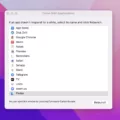
In addition to using Command + Q, you can use Option + Command + Esc to open the Force Quit menu. From the Force Quit menu, select the app and click on Force Quit. This is useful when Command + Q is not working for whatever reason, allowing you to terminate any frozen app on your MacBook.
How to Close Windows Using the Red Close Button
Of course, you can also close windows using the red close button in the top-left corner of the window. This is an alternative to the shortcut. You can use both options. The shortcut is just an alternative when you don’t want to use the mouse or trackpad.
How to Close Tabs vs. Windows on a MacBook
With some apps, you can have multiple tabs open in a single window. For example, when using browsers like Chrome or Safari, you can have multiple tabs open in a single browser window. Closing a tab is easy. Just press on the tab at the top of the screen or hold your mouse over the tab (depending on the browser) and hit the X button near the top of the tab.
What to Do if a Window Will Not Close on a Mac
If a window will not close on a Mac, try using Option + Command + Esc to open the Force Quit menu and force quit the app. You can also right-click on the app in the dock and select the option to close it. If nothing else works, you may have to force restart your Mac.
Best Mac Shortcuts for Managing Open Windows Faster
Here are some other useful Mac window management shortcuts you should know about (the front app and current app are used interchangeably to refer to the active app at the forefront):
- Command + H hides the windows of the active app in the front.
- Option + Command + H hides windows from all other apps except the front app.
- Command + M minimizes the current window to the dock.
- Option + Command + M minimizes all windows of the current app to the dock.
- Control + Down Arrow shows all windows of the front app.
- Command + ` switches to the next windows of the current app. This symbol (`) is called the Grave Accent, and on most Macs, it’s the key above the Tab key and to the left of the number 1.
- Shift + Command ` is similar but goes backwards and activates the previous open window in the front app.
Conclusion
I hope these MacBook window tips were helpful! You can close windows quickly on your Mac by using these Mac productivity shortcuts, allowing you to quickly and easily navigate between different applications and be more productive.
Related posts:
 How To Force Quit Safari ?
  How to Troubleshoot a Unresponsive Mac Dock?
  How to Safely Allow Untrusted Shortcuts
  Best iOS Shortcuts for Improved iPhone Experience
  How to Quit All Apps On Mac?
  Force Quit Finder: How to Close Unresponsive Finder Windows
  How Big Is A MacBook Air ?
  How to Force Quit Mail on Mac